

cropper
ProtestWatch News
  • Home
  • Categories
    • Protest News
    • Civil Rights
    • Government Accountability
    • Police & Federal Response
    • Democracy & Voting Rights
    • Activism & Organizing
    • Legal Watch
    • Community Voices
November 07.2026
5 Minutes Read

Todd Blanche's Controversial Role: How Stephen Miller's Ties Impact DOJ Integrity

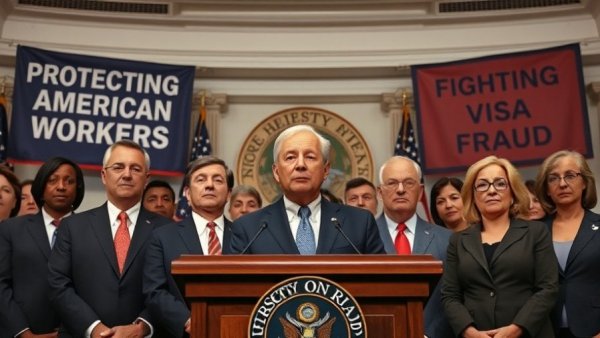
Officials at podium discussing visa fraud related to Todd Blanche impeachment news.

Todd Blanche Under Fire: A Controversial Role in DOJ

The recent announcement by Vice President JD Vance regarding H-1B visa fraud has spotlighted the involvement of Attorney General Todd Blanche, who has been accused of turning the Department of Justice (DOJ) into a personal law firm for Stephen Miller, a controversial figure known for his hardline immigration policies. During a press conference on October 8, 2026, Blanche joined high-profile figures, including Labor Secretary Keith E. Sonderling and FTC Chairman Andrew Ferguson, to address anti-fraud initiatives. However, critics have taken to social media to demand his impeachment, claiming that his actions threaten the integrity of the DOJ.

Understanding H-1B Visa Fraud: Why It Matters

The H-1B visa program has long been tangled in controversy. While it aims to bring skilled labor into the U.S., discussions surrounding its abuse persist. Many argue that fraud cases within the program exploit vulnerable workers and undermine American wages. Analysis of the issue shows conflicting perspectives about its effectiveness. Groups advocating for reform are now emphasizing the need for accountability in managing these cases, directly linking it to Blanche’s newly assumed role. Critics argue that by aligning himself with Miller, known for pushing restrictive immigration policies, Blanche is sending a troubling message about the DOJ’s priorities.

The Link Between Immigration Policy and Politics

The discussion surrounding the H-1B visa program extends into larger political debates about immigration reform and the economic impacts of such policies. Supporters of the H-1B program argue that it is essential for filling skill gaps in the U.S. labor market, particularly in industries like technology and healthcare. They stress that many immigrants contribute positively to the economy, leading to job creation and innovation. Conversely, critics highlight cases of abuse related to the program, suggesting that tightening enforcement is necessary to protect American workers. The crux of the debate rests on finding a balance between welcoming skilled labor and protecting domestic job markets, an area where Blanche’s partnership with Miller raises further concerns about equity and fairness.

Todd Blanche's Connection to Stephen Miller: What's at Stake?

The partnership between Blanche and Stephen Miller raises alarm bells among liberal advocacy groups, who argue that this collaboration could lead to a detrimental shift in U.S. immigration policy. Observers fear that the DOJ may shape its enforcement tactics to align with Miller’s hyper-conservative viewpoints, which have historically favored aggressive scrutiny of immigrants and restrictive reforms. Such ties have ignited discussions about whether the DOJ is focusing on equitable law enforcement or being manipulated for political ends. The implications of this relationship could reverberate through various communities, including tech companies that rely heavily on international talent and immigrants seeking opportunities to contribute to American society.

Repercussions on the Immigration Front: A Heated Debate

The public outcry following Vance's announcement has sparked renewed interest in the impact of high-profile political partnerships on marginalized communities. Proponents of reform are concerned that Miller’s influence will lead to harsher immigration policies, potentially criminalizing routine administrative errors among H-1B applicants. Critics argue that a narrow focus on fraud could overshadow the plight of countless immigrants who play vital roles in the economy. This stance has received backlash from labor and human rights organizations, emphasizing the urgent need for checks and balances within the DOJ to safeguard the rights of immigrants. With Blanche at the helm, many fear for the future of workers arriving from abroad seeking better opportunities and lives.

The Response from Advocacy Groups and Activists

In response to the developments surrounding Todd Blanche and the DOJ's potential shift in policy focus, various advocacy groups have mobilized efforts to voice their concerns and demand accountability. Organizations such as the American Civil Liberties Union (ACLU) and other immigrant rights groups have taken to social media, hosting virtual town halls and webinars to educate the public on the implications of these policy changes. Grassroots movements have begun organizing protests, urging for a more compassionate, human-centered approach to immigration law enforcement. Activists argue that such collaboration between political figures may cultivate a climate of fear among immigrant communities, which could inhibit their ability to thrive and work without fear of reprisal.

What's Next for Todd Blanche?

As calls for his impeachment escalate, Todd Blanche's future as Attorney General remains uncertain. Many lawmakers and activists on the liberal front are demanding accountability and transparency regarding his decisions and collaborations. With the midterm elections on the horizon, this issue could shape political narratives significantly. Analysts warn that the current administration must tread carefully to maintain public trust in governmental integrity. Discussions around Blanche's potential impeachment could create a rallying point for liberal voters, making the importance of effective representation in government more pronounced.

The Bigger Picture: Legal Implications and Political Fallout

The overall implications of Todd Blanche’s actions and associations extend far beyond the H-1B program, influencing broader conversations about governmental accountability and the execution of justice. Calls for his impeachment resonate not only with critics of his tenure but also with anyone concerned about the potential politicization of legal institutions. This situation exemplifies a pivotal moment in how political affiliations could shape the enforcement of laws that affect millions. As the landscape of American politics continues to evolve, the ramifications of these decisions may influence not only current policies but also set precedents for future administration practices.

Call to Action: Engage and Educate

As this saga unfolds, it’s crucial for individuals and communities to stay informed. Engage in conversations, share insights, and advocate for transparency in government. The future of immigration policy and legal integrity is at a fork in the road. Challenge yourself to deepen your understanding of these issues and your role in shaping them. Join local forums or share informational resources on social media to keep fellow community members educated. Whether you are directly impacted by immigration policy or an ally advocating for change, your voice matters and can contribute to a more just and equitable policy landscape.

Government Accountability

7 Views

0 Comments

Write A Comment

*
*
Please complete the captcha to submit your comment.
Related Posts All Posts
11.22.2026

Trump's Directive: Federal Contractors Must Clear Queries with White House

Update Trump's New Order: Federal Contractors Under Scrutiny In a notable move from the Oval Office, President Trump has mandated that federal contractors and subcontractors seek prior approval from the White House before handling any Congressional inquiries. This sweeping executive order, described as an effort to protect executive privileges, arrives at a time when Democrats are gearing up for aggressive oversight as they prepare to take control of Congress in the coming months. This shift reflects a broader trend of increasing tension between the executive branch and Congress, particularly with regards to oversight of federal spending and ethics in government operations. Understanding Executive Privilege and Its Implications The executive order emphasizes the administration's stance on controlling communications between contractors and Congress. Federal agencies are instructed to coordinate not only with the White House but also with various U.S. agencies regarding suitable responses to Congressional requests. This top-down approach raises several questions about what constitutes executive privilege and when it can justifiably be invoked. Executive privilege, a power utilized by past presidents, allows the executive branch to withhold certain information from legislative scrutiny to maintain confidential discussions within the White House. However, this authority is not absolute and often results in contentious legal battles that can stretch out for years over what information is legitimately protected. In recent history, the invocation of executive privilege has frequently led to significant court decisions that define the limits and scope of this power. Contextualizing the Order Amid Political Tensions The order comes in the backdrop of increasing scrutiny over government contracts, especially concerning companies linked to Trump’s family, such as those contracted by the Pentagon. As Democrats push forward with investigations into federal spending, accusing the Trump administration of potentially corrupt practices, this maneuver is seen as a defensive strategy to mitigate accountability and transparency. The political ramifications of this situation cannot be overstated, as they may influence public perception and trust in the federal contracting process. Will Scharf, a counsel for Trump, has characterized Congress' inquiries as overreach, asserting that Democrats’ attempts to compel certain individuals to cooperate with investigations are premature given their minority status. This rhetorical framing serves to align the administration's actions with a narrative of protecting constitutional rights against what they depict as legislative encroachment. The insistence on pre-approval from the White House puts contractors in a challenging position, potentially hindering their ability to cooperate with Congress and engage in necessary transparency about their operations. Historical Context of Oversight and Response Historically, executive privilege has been a contentious issue, often surfacing during periods of political upheaval or investigation. The Nixon and Clinton administrations experienced notable clashes over the use of executive privilege, each leading to landmark Supreme Court decisions clarifying the extent of this power. These historical precedents highlight the ongoing struggle for balance between the need for executive confidentiality and the fundamental role of Congress in overseeing federal operations. Trump's order, while reflective of these historical battles, also demonstrates a strategic response to current political dynamics. Democrats are aiming to probe deeper into an administration suspected of blurring ethical lines, particularly related to nepotism and contracting practices. For Trump, the stakes are high; shielding contractors from Congressional pressure may also safeguard his interests and those of his associates. This environment of heightened scrutiny leads to an atmosphere of fear among contractors, who may prioritize their business interests over transparency. Challenges for Federal Contractors and Subcontractors This new directive imposes additional challenges for federal contractors who may already be navigating complex regulations surrounding federal contracts. The potential consequences, including contract termination or future work suspension for noncompliance, may create a chilling effect on the willingness of companies to engage openly with Congress. Compliance with such an order could further complicate the already intricate relationships between businesses and government entities involved in contract negotiations. Moreover, with tens of thousands of businesses affected by this order, the potential for confusion over communication protocols adds to the complexities of government contracting. Businesses may find themselves weighing their allegiance between complying with federal requirements and being forthcoming with oversight inquiries. The uncertainty surrounding the repercussions of potential disclosures amplifies the stakes for contractors, leading to a precarious balance between legal compliance and ethical responsibility. What Lies Ahead: Future Implications As we look towards the upcoming Congressional sessions, the friction between Trump’s administration and the Democratic majority promises to escalate. Democrats have already signaled they will not back down easily, with Rep. Robert Garcia asserting that they are just beginning their investigative efforts. The tension between the executive branch and Congress over oversight will likely set the stage for a series of political battles that could dominate the national conversation. This ongoing struggle for oversight and accountability raises significant implications for future governance. It begs the question: how will this confrontation reshape the interactions between contractors and Congress? The potential for litigation surrounding executive privilege and contractor agreements seems likely to increase, impacting not just governmental operations but potentially stifling innovation and responsiveness in federal contracting. Furthermore, this power play might encourage contractors to reassess their relationships with governments, potentially leading to a shift in how businesses engage in federal work. A Call to Civic Engagement and Advocacy The balance of power between the executive branch and Congressional oversight is a foundational aspect of American democracy. Citizens and advocacy groups alike must remain vigilant and engaged in these discussions, ensuring that accountability mechanisms are not undermined. As investigations unfold, it’s vital for the public to advocate for transparency in government dealings and support efforts that uphold Constitutional checks and balances. As this political saga unfolds, it serves as a reminder that the health of American democracy is rooted in active civic engagement. Citizens should emphasize the importance of oversight and accountability in government dealings. An informed and engaged public plays a crucial role in holding officials accountable and ensuring that democracy functions effectively in a manner that serves the best interests of all citizens.

11.22.2026

How Trump-Influenced Courts Challenge Civil Liberties: Judge Kurtz's Controversial Rulings

Update Unpacking the Shadow Play of Trump's Legal Maneuvers In the ever-evolving landscape of American politics, few developments are as concerning as the growing intertwining of legal proceedings and political agendas. The recent decisions by various judges in the Trump administration's legal battles raise alarms among civil liberty advocates. The administration has leveraged the judiciary in ways that threaten the integrity of legal processes, as highlighted by the latest actions of Judge Jeffrey Kurtz. Judge Kurtz: A Familiar Narrative As the Trump administration seeks to manipulate legal frameworks, Judge Jeffrey Kurtz emerges as a pivotal figure in this narrative. Appointed to the federal judiciary amid Trump’s push for loyalist judges, Kurtz has displayed an alarming bias towards Trump’s interests. His recent ruling in favor of Trump against the BBC demonstrates an unsettling disregard for legal norms. By allowing Trump to postpone his deposition, Kurtz effectively undermines the judicial process, raising questions about accountability. Kurtz's actions come at a time when many in the legal community are already concerned about the erosion of judicial independence. Critics argue that such decisions create a precedent where powerful individuals can manipulate the legal system to evade scrutiny, potentially setting dangerous implications for future cases. This perception of bias, especially when backed by the executive branch, threatens not only the fairness of trials but also the public's trust in the judicial system as a whole. The Fight for Transparency: ABA's Challenge While actions from the courts such as those by Judge Kurtz raise eyebrows, they also spark resistance. The American Bar Association (ABA) has taken a stand against what it describes as “law firm intimidation policies.” Under these policies, Big Law firms are pressured to provide services to the Trump administration free of charge while prohibiting diversity, equity, and inclusion initiatives. These tactics not only set a dangerous precedent but also threaten the integrity of legal practices across the nation. The ABA's litigation against the Trump administration's policies is not merely a fight for legal transparency; it is a broader battle for maintaining ethical standards within the legal profession. Legal professionals are meant to defend the rule of law and uphold the rights of all individuals, regardless of their position or political affiliations. When undue pressure is placed on firms to act contrary to these principles, it diminishes the public’s faith in the legal system and its practitioners. A Glaring Example of Judicial Overreach The ongoing saga involving Kalshi, a prediction market company, serves as another example of judicial overreach. After the Fourth Circuit Court ruled that Kalshi must comply with Maryland’s gambling laws, the administration’s fanciful assertions about regulation were dismissed. This reality check illustrates the judiciary's role as a counterbalance to executive overreach, showcasing the importance of maintaining checks and balances within government. When the courts stand firm against the administration's attempts to sidestep regulations, they uphold the principle that no one, regardless of status or influence, is above the law. The Fourth Circuit's decision emphasizes the necessity of transparency and accountability, which resonates with advocates of civil liberties. Moreover, this legal ruling serves as a reminder of the judiciary's vital function in preserving democratic processes and ensuring that government actions are legally justified. The Broader Implications of the Current Judicial Landscape The interplay between the judiciary and political agendas raises serious questions for the future of governance in America. The perception that judges are acting out of political allegiance rather than fairness threatens foundational elements of democracy. With the composition of the courts increasingly becoming contested battlegrounds, the importance of appointing judges with a commitment to impartiality has never been clearer. As this situation continues to unfold, civil liberty advocates must remain vigilant. The intertwining of judicial independence and political maneuvering poses significant risks for democracy. Will future cases reveal further examples of bias within the judiciary? As upcoming legal battles test the resilience of established principles, the public discourse surrounding these issues will be crucial. Our courts must represent a balanced approach to justice that safeguards the rights of every citizen, rather than catering to political whims. Moving Forward: A Call to Action for Civil Liberties Advocates The actions of Trump’s administration within the judiciary compel civic-minded individuals to engage in activism. Citizens must advocate for transparency and accountability among our judicial officials. Civil liberties organizations play a pivotal role, pushing back against policies that threaten constitutional rights. By raising our voices, we can foster a stronger democracy where all voices are heard and respected. Engagement in local civil rights initiatives and organizations can strengthen our collective resistance to encroaching authoritarian tendencies. Knowledge is power; equipping ourselves with information about our rights and the legal system can lead to informed actions that champion justice. Consider attending town hall meetings, participating in community workshops, and educating ourselves on the workings of the judiciary to become better advocates for reform. Ultimately, sustaining the integrity of the judicial system is a shared responsibility. Each of us has a stake in ensuring that our courts remain a bastion of fairness and justice. Together, through informed advocacy and community involvement, we can weather the challenges posed by these turbulent political times.

11.21.2026

Trump's Recent Press Conference: Diplomatic Promise or Political Ploy?

Update Trump's Press Conference: A Turning Point or A Teetering Line? In a press conference filled with derivative remarks and grand yet vague claims, President Trump offered a recap of his recent trip to Asia—a journey marked by unprecedented diplomatic meetings with Chinese President Xi Jinping and Russian President Vladimir Putin. Observers noted the absence of significant agreements on crucial global matters, revealing a tension between Trump's 'America First' rhetoric and the complex, interdependent reality of global politics. Behind the Diplomatic Veil: Assessing the Real Outcomes During his address, Trump spoke of entering his Asia trip from a position of 'unmatched economic and diplomatic strength.' However, questions linger on whether this assertion holds any water when juxtaposed with the lack of substantial agreements reached during these high-stakes meetings. His comments gave a nod to the notion of imposing 'guardrails' around artificial intelligence collaborations with Xi, a departure from his earlier preference for unregulated U.S. dominance in technology. The AI Dilemma: Promises Versus Practicalities Trump's intriguing shift towards discussing guardrails for AI—what he termed 'super intelligence'—comes after years of asserting that any restrictions would diminish American innovation. Such contradictions raise eyebrows among critics and supporters alike. While claiming to want America to dominate the AI landscape, Trump simultaneously approved the sale of advanced chips to Chinese tech giants, including those linked to military operations. These conflicting directives challenge the consistency of his strategy and mandate clarity in a rapidly evolving tech sector. Cybersecurity Under Fire: A New Era of Accountability The press conference also shed light on leadership changes within the cybersecurity domain, with Trump announcing the firing of Sean Carncross, a move he justified by claiming, 'I don’t think that person was good enough.' This decision reflects an aim to reshape the nation's cybersecurity strategy. Activists are eager to see whether a leadership change will bring more robust protections for American data and privacy rights against foreign threats. What This Means for American Democracy The themes of Trump's press conference reverberate beyond international diplomacy; they speak volumes about the struggles of democracy today. In a climate where authoritarianism seems to lurk at every corner of U.S. politics, the future of American leadership on the global stage begs critical questions. How will this administration handle its diplomatic posture while maintaining domestic accountability? And, ultimately, what role will citizen activism play in shaping governmental accountability within increasingly authoritarian structures? For those interested in standing up for democracy and advocating against authoritarian tendencies, staying informed and engaged is vital. Are you ready to learn more about organizing protests or joining local movements defending civil liberties? Visit community platforms and activist networks in your area to find out how you can make your voice heard.

ProtestWatch News

We will not go quietly into the Authoritarian Abyss.  Real Americans do not like Fascism!

Ojib Designs

  • Privacy Policy
  • Terms of Use
  • Advertise
  • Contact Us
  • Menu 5
  • Menu 6

3479746224

AVAILABLE FROM 8AM - 5PM

Straight out of Michigan

ABOUT US

ProtestWatch News is an independent media blog covering protests, civil liberties, and government power in the United States. We report on policies and actions critics view as authoritarian, while highlighting how Democratic leaders, activists, and communities respond and organize. Our mission is to inform readers, amplify civic engagement, and document how democracy is debated, defended, and practiced across the country.

© 2026 CompanyName All Rights Reserved. Address . Contact Us . Terms of Service . Privacy Policy

Terms of Service

Privacy Policy

Core Modal Title

Sorry, no results found

You Might Find These Articles Interesting

T
Please Check Your Email
We Will Be Following Up Shortly
*
*
*